
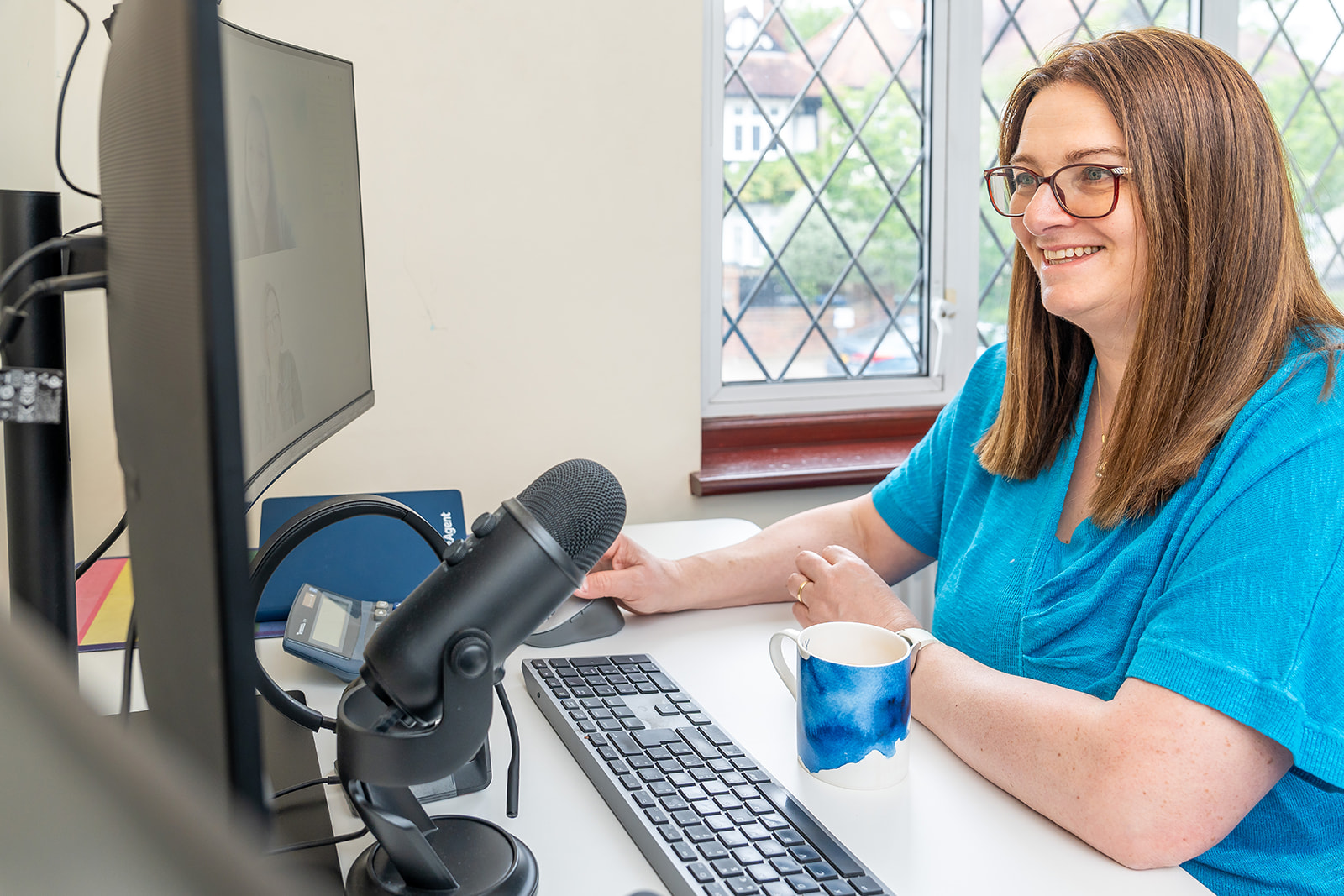
Claudia Sheena, FCA and founder of Claudia Sheena Accountancy Services Ltd.
I had a really interesting conversation with a client this week.
She’s brilliant at what she does.
She has built a successful business around her expertise and wants to grow it.
But there’s a problem.
She’s running out of hours.
She has young children, so her working week has to fit around school runs, school holidays and family commitments.
She wants to earn more money.
But she doesn’t want to burn herself out in the process.
And I completely understand that.
So we started looking at her options.
Could you increase your prices?
Possibly.
But there is a limit to what people are prepared to pay.
And increasing your prices does not automatically mean you will earn more if you lose clients as a result.
You also need to think about the value you provide, the alternatives available to your clients and whether your current customers can realistically afford the increase.
A price review can be sensible.
But it should be based on more than simply deciding that you need to earn more.
Could you introduce a premium service?
Absolutely.
A higher-priced service could help you increase your average income from each client.
But would there be enough demand for it?
There is no point creating a fantastic high-ticket service if there are not enough customers willing to pay for it.
Before you spend weeks building a new offer, speak to the people you believe it is for.
What problem would it solve?
What are they doing at the moment?
What have they already tried?
And, importantly, would they pay for a solution?
Could you take on more clients?
That brings us straight back to the original problem.
There are only so many hours in the week.
Particularly when you are trying to build a business around family life.
More clients may increase your income.
But they may also increase your admin, customer service, preparation and delivery time.
You need to look at the whole picture.
Not just the extra sales.
And that is when our conversation took a different direction.

Claudia Sheena FCA with her team
What if growth did not mean selling more hours?
What if you could help several people at once instead of helping one person at a time?
Perhaps through:
- Group sessions
- A membership
- An online course
- A digital product
- A workshop
- A programme delivered over several weeks
- Templates, resources or guides
The right option will depend on your business.
But the principle is the same.
You use the knowledge and expertise you already have.
Then you deliver it in a different way.
Instead of selling another hour of your time every time you want to earn more, you create something that can help more people without needing more hours in your diary.
That does not mean the work disappears.
It means your time may have more reach.
Additional income can help with quieter periods
There is another benefit.
Many businesses naturally become quieter at certain times of the year.
For some founders, that may be the school holidays.
For others, it may be January, the summer or the period around Christmas.
A second income stream could help smooth out those quieter periods.
It may also reduce some of the financial pressure that comes from relying on one type of work.
This does not mean you need to build a completely separate business.
You may be able to develop something that sits naturally alongside what you already do.
For example, a consultant might offer a group programme.
A designer might create templates.
A coach might create a membership.
An expert might produce a practical online course.
You already know what your clients ask you about.
That may be a useful place to start.
How do you work out what to build?
This is the part that matters.
It is very easy to get excited about an idea and start building immediately.
You create the course.
You design the website.
You choose the software.
You spend weeks preparing the content.
And then you discover that people like the idea but do not actually want to buy it.
So I would start with the demand.
1. Speak to the people you want to help
Choose one clear group of potential customers.
Then speak to them.
Ask questions such as:
- What is the biggest problem you are trying to solve?
- What have you already tried?
- What is that problem costing you?
- What would a useful solution look like?
- Would you prefer one-to-one help, group support or something you could work through yourself?
- What would make you comfortable paying for it?
Do not rely only on people saying, “That sounds great.”
Compliments are encouraging.
Paid bookings are better evidence.
2. Create a minimum version
You do not need to build the finished product immediately.
Start with a simple version.
That could be:
- A four-week group programme
- A live workshop
- A small founding membership
- A short course with live support
- A digital guide sold to a specific audience
Explain what the offer will help people achieve.
Explain who it is for.
Explain what is included.
Then set a price.
You could invite a small number of people to join a first pilot.
That gives you the opportunity to learn what works before investing heavily in content, software and automation.
3. Charge enough for it to be worthwhile
Your price needs to reflect more than the time spent delivering the session.
You should also include:
- Preparation
- Marketing and sales
- Customer onboarding
- Emails and administration
- Feedback
- Community support
- Payment fees
- Software
- Follow-up
A group programme may look very profitable if you only count the live session.
It may look very different once you count everything around it.
A simple calculation can help:
Income = number of customers × price
Then compare that with your total time and additional costs.
How many people do you need for the offer to be worthwhile?
What is the minimum number you need?
What is the maximum number you can support without creating another capacity problem?
You may want to offer different levels.
For example:
- Group access only
- Group access with limited individual feedback
- A self-paced version at a lower price
Keep the boundaries clear.
Unlimited messages and unlimited personal support can quickly turn a scalable offer back into one-to-one work.
Look at the numbers before you launch
This is where useful financial information can make a real difference.
Your management accounts should help you understand how your existing business is performing.
They can also help you decide whether you have the time and cash to test something new.
You may want to look at:
- Current monthly profit
- Cash available to invest
- Seasonal changes in sales
- Your existing profit margins
- The income you need from the new offer
- The additional costs it will create
- How long you can test it before reviewing the results
This is one reason I believe accounting should be more than looking backwards at what has already happened.
The numbers should help you make decisions while there is still time to act.
A proactive accountant can help you test the assumptions behind the idea.
You do not need a complicated forecast.
You do need a realistic one.

Claudia Sheena, FCA and founder of Claudia Sheena Accountancy Services Ltd.
Do not forget tax and structure
A new income stream is still part of your business finances.
Even if it starts as a small experiment.
Keep clear records from the beginning.
That includes:
- Sales invoices
- Payment-platform records
- Receipts
- Software costs
- Advertising costs
- Contractor or freelancer costs
- Refunds
- Customer deposits
- Money set aside for tax
If you are operating as a sole trader, your additional trading income may need to be reported to HMRC.
The £1,000 trading allowance can be relevant in some situations, but it is not a reason to ignore the records. You can read more through the government’s guidance on tax-free allowances for trading income.
You should also check whether your total taxable turnover is approaching the VAT registration threshold.
At the time of writing, the threshold is £90,000 of taxable turnover over a rolling 12-month period, or where you expect to exceed that amount in the next 30 days. See the current GOV.UK VAT registration guidance.
It is your total taxable turnover that matters.
Not just the sales from the new course, membership or group programme.
The structure of your business may also need reviewing.
If you already operate through a limited company, the new income stream may sit within that company.
If you are a sole trader, you may be wondering whether you should set up a limited company.
There is no automatic answer.
A limited company can provide a separate legal structure, but it also brings additional administration, reporting and rules around taking money out of the company.
Incorporation is not automatically tax-efficient.
The right decision depends on your profits, risk, plans for the money and the way you expect the business to develop.
A limited company accountant can help you consider the wider picture rather than focusing on one tax rate in isolation.
Start small, then review honestly
You do not need to commit to a large launch.
You could use the next 30 days to:
- Speak to potential customers.
- Identify one clear problem to solve.
- Create a simple outline of the offer.
- Set a price and minimum number of customers.
- Invite people to join a pilot.
- Record the time and costs involved.
- Review the results.
Then decide what to do next.
Repeat it.
Change the price.
Change the format.
Change the audience.
Or stop.
Stopping is not failure if the testing has shown that the idea does not work.
It is much better to find that out early.
The aim is not passive income at any cost
Now, I’m not suggesting passive income is easy money.
Creating something people genuinely want to buy takes time, effort and planning.
Group programmes and memberships still need work to deliver.
Digital products need updating.
Courses need marketing.
And customers still need support.
But the potential to earn more without working proportionately more hours is what makes this interesting.
Sometimes growing a business is not about working harder.
It is not always about finding more clients.
And it is not necessarily about charging higher prices for every appointment.
Sometimes it is about finding a different way to deliver what you already do brilliantly.
I should probably be taking some of my own advice.
I have been thinking about ways I could use my accounting and business knowledge to help more people without everything needing to involve a one-to-one meeting.
I have a few ideas.
I am still working out what would be genuinely useful and what people would actually want.
So watch this space.
In the meantime, if you are considering a new income stream, I would be happy to talk it through with you.
As an accountant who works with small business owners, I can help you look at the practical side of the idea, including the numbers, timing and likely financial impact.
You can book a chat with me when you are ready.
No pressure.
Just a conversation about what you are considering and what you would need to understand before moving forward.
Clear numbers. Practical decisions. Growth that fits your life.
P.S. Sometimes growing a business is not about working harder, finding more clients or even charging higher prices.
Sometimes it is about finding a completely different way to deliver what you already do brilliantly.